Tampilkan postingan dengan label walking tours. Tampilkan semua postingan

Old Tbilisi Walking Tour of Architecture and Hidden Treasures

Old Tbilisi Balconies Walking Tour Georgia

When I told the only other person I know who has traveled to Georgia that we were heading to this magnificent country, one of her many suggestions was to set aside time to walk through old Tbilisi to soak in the crumbling architecture and iconic Tbilisi balconies.  So when our guide Anna offered to take us on an old Tbilisi walking tour to see the Art Nouveau architecture, we immediately said yes. 

4 Daniel Chonqadze Street Old Tbilisi Walking Tour Georgia

We were surprised to learn that there was more for tourists to Tbilisi to see than just what is visible from the street.  If we hadn’t had a guide, we would have never known that additional treasures were held inside the entryways of these Art Nouveau homes.  (By the way, in case your knowledge of architectural styles is as minimal as mine, Art Nouveau is a style of architecture and design with linear and curving designs that was popular from the late 19th century until World War I.)  As many of them are now apartment buildings, it is sometimes possible to pass into the entryways where a few still retain their ornately painted ceilings, intricate stairway metalwork, and even wall decorations as well.

Rustaveli Avenue Old Tbilisi Walking Tour Georgia

We first visited a curved tall building with interesting metallic work covering the windows on Rustaveli Avenue just southeast of Vano Sarajishvili Street.  But that wasn’t our destination.  

Rustaveli Avenue House Old Tbilisi Walking Tour Georgia

We walked behind that building and found a secluded courtyard in the middle of the block with an aqua home presiding over the tiny remnant of a garden with a fountain and statues.  Most of the homes along Rustaveli Avenue were destroyed, but this one was saved because the son of the family acted as a doctor to Stalin and he asked for the home to be saved from destruction.  The same family still lives in the home today and it is an example of how these old homes can be restored to continue standing for another century.

14 Alexander Griboedov Street Entryway Old Tbilisi Walking Tour Georgia

We continued passing through the block, walking through hidden courtyards surrounded by more modern and functional wood paneled balconies, some enclosed, some with clothes hanging from the line, until the block emptied out onto Alexander Griboedov Street.  Heading southeast, we passed the Tbilisi State Academy of Arts and continued gazing at crumbling facades until we reached No. 14 Alexander Griboedov Street.  This home was built by an Armenian gentleman with a successful fish business.  The residence has two entries because he used the upstairs for his home and rented out the first level.

14 Alexander Griboedov Street Home Old Tbilisi Walking Tour Georgia

While gawking at and taking pictures of the painted ceiling inside, something unprecedented occurred.  Two women who live in the building came home and asked if we wanted to come inside their home and see what the rooms looked like inside!  Anna said this never happens, even if Georgians are known for the boundless hospitality.  They might have thought we were foreign investors who might have the ability to help restore the building, or maybe they could just tell we were genuinely entranced by the building they call home.  The lavish decoration, like carved wood trim painted with pastels and gold, which remains intact in their apartment is stunning.  They told us their apartment was originally a guest room or entertaining room that held just one piano.  Now the rooms of what used to be a residence for one family are separated into multiple apartments.

No. 15 Alexander Griboedov Street Old Tbilisi Walking Tour Georgia

Our next Art Nouveau entryway along our old Tbilisi walking tour was across the street at No. 15 Alexander Griboedov Street.  This was originally the home of an Armenian businessman who specialized in French wine.

Tbilisi Classic Gymnasium Old Tbilisi Walking Tour Georgia

We diverted course and headed back out to the main thoroughfare of Tbilisi, Rustaveli Avenue.  Between Lesia Ukrainka Street and Zakaria Chichinadze Street is an important Tbilisi institution, the Tbilisi Classic Gymnasium.  The Tbilisi Classic Gymnasium is one of the oldest educational institutions of Georgia.

Parliament of Georgia and April 9 Memorial Old Tbilisi Walking Tour

Next door to the Tbilisi Classic Gymnasium is the old Parliament of Georgia.  Georgia’s Parliament is now in Kutaisi, but the old Parliament building of Tbilisi still remains.  This building was built after the Art Nouveau period.  In front of the Parliament building is an April 9 memorial, which commemorates the tragedy that occurred on the steps of Parliament on April 9, 1989.  On that day, an anti-Soviet demonstration was held.  When it was dispersed by the Soviet Army, 20 people were killed and hundreds of others were injured.  Today April 9 is a national holiday, the Day of National Unity.

Freedom Square Old Tbilisi Walking Tour Georgia

We continued down Rustaveli Avenue until we reached Freedom Square, a huge roundabout that circles the gleaming gold statue of St. George.  From there we headed up Giorgi Leonidze Street, which used to be known as the warm street because both sides of the street were always sunny, no matter the time of day.  This is no longer the case today, however.

This is the beginning of the Sololaki District, which used to have a water system used to water the gardens.  One hour of watering would cost one silver coin.  In the middle of the 19th century, the Russians blocked the water channels and made the area a dry area.  The land of the Sololaki District became very expensive and European-style buildings designed by the best Georgian, Russian, and Armenian architects were erected in this part of Tbilisi, mostly between 1880 and 1910.  The Sololaki District has also been called little Paris because the streets are set up in a grid pattern rather than curving and winding every which way like in other parts of Tbilisi.

No. 3 Giorgi Leonidze Street Old Tbilisi Walking Tour Georgia

Turn your eyes up at No. 3 Giorgi Leonidze Street, which used to house the Tbilisi Mutual Credit Society.  An Armenian architect decorated the outside with Pluto and Mercury.  A third story was added during Soviet times, but fortunately, this addition did not alter the original decorative appearance of the building.

Glove Maker Shop Old Tbilisi Walking Tour Georgia

A few doors down we stepped into No. 8 Giorgi Leonidze Street.  It just looks like a standard drug store from the outside.  The previous occupant of this building needed to pay off his debt so entered the Russian army.  For his service in the war with Turkey in 1878 he was given the building as a gift.  He had always wanted to be a pharmacist, and his pharmacy became quite popular.  Today his original pharmacy cabinets still stand, but now they are filled with Nestle.  Across the street from the pharmacy is an unusual looking building, even for old Tbilisi.  Through the oval entryway with its sunflower façade used to be a women’s glove maker shop.

No. 9 Geronti Kikodze Street Old Tbilisi Walking Tour Georgia

I don’t know the story behind No. 9 Geronti Kikodze Street, but I love the metalwork of the curving staircase.  This is one of the brighter of the entryways of old Tbilisi.  The walls have been painted solid colors, but the artfully painted ceiling still remains, though it is hanging on by a thread as it is cracked, with small sections looking like they might drop to the floor at any second.

No. 58 Lado Asatiani Street Old Tbilisi Walking Tour Georgia

Heading deeper into the Sololaki District, we came to No. 58 Lado Asatiani Street.  The outside of the building is quite well preserved, with its reddish-brown brick walls, arched doorway and windows, and curved balconies framed with iron railings.  The wooden door is a work of art with lion heads scattered amongst the iron scrolls.  As we walked through those doors we were greeted with the word “salve,” which means welcome in Latin, embedded in the cracked tile floor.  This entryway is very colorful with green painted walls scratched and graffitied.  The peeling painted ceiling is a vibrant combination of coral, blue, yellow, and white with a mix of flowers, swans, urns, and devilish-looking figures with horns, wings, and tails, some playing trumpets.

4 Daniel Chonqadze Street Garden View Old Tbilisi Walking Tour Georgia

When we entered the doors of 4 Daniel Chonqadze Street, we were greeted by a dark entry with seemingly endless flights of stairs heading upwards.  This house looks down at all the other houses around and has two entrances, one from the street above and one from the street below.  While the lower half is strictly graffitied white walls, as we ascended the stairs we encountered wall decorations and water damaged painted ceilings.  We walked out a door at the top which led into a small hidden garden.  The outside is different from the surrounding Tbilisi architecture as it has more of an English Tudor look.

Writers' House of Georgia Old Tbilisi Walking Tour

No. 13 Ivane Machabeli Street is another Art Nouveau old Tbilisi home restored to its previous glory.  The construction of the home was commissioned by David Sarajishvili, an awarded Georgian brandy producer, patron of the arts, and philanthropist, who lived in the residence from 1905 to 1911.  The German architect Carl Zaar headed the construction along with Georgian architects Alexander Ozerov and Korneli Tatishev.  The home later changed hands to Akaki Khoshtaria, an entrepreneur, philanthropist, and famous public figure, who lived there from 1918 to 1921. 

Writers' House of Georgia Garden Old Tbilisi Walking Tour

Today it is the Writers’ House of Georgia, an open space for Georgian culture.  When we visited they were still restoring the upstairs, but they let us walk through the ground floor rooms.  The outside garden has gorgeous tiling and has a display of old photos showing how the rooms used to look.  The garden is also an example of how the Tbilisians moved their signature balconies from the outside of their homes to the inner courtyards to conform to European design during the Art Nouveau period.

Galaktion Tabidze Street Old Tbilisi Walking Tour Georgia

On the even-numbered side of Galaktion Tabidze Street (I didn’t see a number, but it might be 20) we entered a dark portico unique from others we had entered because of the paintings on the walls.  Unfortunately, they have seen better times.  You can see the vibrant colors peeking through the blackness.  In Soviet times, the paintings were covered with lacquer to preserve them from being destroyed, but unfortunately, this damaged the paintings.  The paintings, painted by a Jewish artist, depict a different area in the world.  The first, of course, is Russia, and others include Africa, America, Asia, and Europe.  Most of the wall and ceiling paintings heading up the stairs have survived as well.

No. 4-6 Betlemi Street Stained Glass Entry Old Tbilisi Walking Tour Georgia

Our final stop on our old Tbilisi architecture walking tour was about a block up from Jerusalimi Street at No. 4-6 Betlemi Street.  As you’ll notice from the street names, this is the Jewish Quarter of Old Tbilisi and this is a typical Jewish wooden house with an outdoor covered entrance with stained glass and an ornate wraparound balcony with lace-like latticework. 

No. 4-6 Betlemi Street Balcony Old Tbilisi Walking Tour Georgia

Many of the Art Nouveau buildings of old Tbilisi are protected as historical structures.  However, they cannot be restored quickly enough.  Some are on the verge of crumbling and some have already collapsed.  Hopefully these architectural treasures will be preserved and restored, but just in case, be sure to visit these ornate relics from the past while you can.


Of course, you can make your own walking tour of old Tbilisi and use this as a guide (hopefully my frantic note taking was enough to get you to the right places), or create your own tour and peek into the buildings that peak your interest.  But if you want to be guided by an expert of old Tbilisi and its Art Nouveau architecture and learn the stories behind the buildings, you may want to hire a guide.  You can try to book an old Tbilisi walking tour with our guide Anna Koripadze (anakoripadze@yahoo.com) or, if she is unavailable, she can suggest another guide for you.  What I know for sure is that once you have a taste of what these old buildings hide you’ll peek into every open entry you pass with the hopes of finding a new treasure.


Thank you to the Georgian National Tourism Administration for hosting our trip to Georgia and making this post possible.  As always, all opinions are my own.


Travel the World: A guide to an old Tbilisi walking tour through Georgian architecture and painted ceilings.

The Walking Tours of New Orleans

French Quarter Courtyard Walking Tour New Orleans
A French Quarter courtyard discovered during our French Quarter walking tour.
New Orleans is a city of history and stories and locals who want to share those stories with visitors.  One of our walking tour guides said it could take months, if not years, for her to share everything we would need to know to understand New Orleans.  While travelers can certainly soak up New Orleans’ historic architecture, friendly people, mouthwatering food, tasty cocktails, and soul-stirring music while walking the streets of New Orleans on their own, they might miss the history and stories that define New Orleans.  Taking one or more of New Orleans’ walking tours will acquaint visitors with the pieces of past and present that make New Orleans the city it is today.  Here are some of the best walking tours of New Orleans and just a few highlights of what you can learn from them. 

French Quarter Walking Tour


New Orleans was founded in the early 1700s by Jean-Baptiste Le Moyne de Bienville, and the city did not expand past the borders of the French Quarter for nearly a century.  Today the entire French Quarter district is on the National Register of Historic Places.  The site of the city was chosen because it is on the shores of the Mississippi River, through which the waters from 31 states drain, and the land in this small area is on slightly higher ground created by river silt buildup, which is why the French Quarter remained comparatively undamaged when the levies of New Orleans broke during Hurricane Katrina.  A French Quarter walking tour educates travelers on the history of the French Quarter from the very beginning. 

Bourbon Street – Some may think Bourbon Street is named after the alcohol because of its reputation for being a popular drinking spot.  However, Bourbon Street had its name way before the bars arrived and was actually named after the royal Bourbon Family.

Cajun vs. Creole – Creole means native-born, so a creole person was someone born in Louisiana and whose parents were from elsewhere.  Today creoles are descendants of these first generation settlers.  Cajuns are descendants of French Canadians who came to Louisiana.  Cajun and creole cuisine are also different.  Creole dishes are many times red because they are tomato-based while Cajun food starts with the holy trinity of bell pepper, onion, and celery, are browner in color, and are spicier.

Canal Street Streetcar French Quarter Walking Tour New Orleans
Canal Street, the division between the French Quarter and the English section.
French vs. English – The residents of the French Quarter were primarily French.  The street names are French.  When the English came, they took up residence on the other side of Canal Street to the southwest of the French Quarter.  This is why all the street names change once you cross Canal.  Canal Street was neutral ground and even today street medians are referred to as neutral ground by residents.  Canal Street is 171 feet wide and was originally meant to be a canal.

Storyville – Storyville was the neighborhood just above the French Quarter.  Storyville is where New Orleans’ music scene started and was the location of the first jazz clubs.  The biggest seller in the area was alcohol, and prostitution was rampant.  It wasn’t illegal, but it also wasn’t legal.  Storyville was shut down in 1917 after the war started because the Federal government was worried about the spread of disease to the military.  New Orleans Mayor Martin Behram responded, “You can make [prostitution] illegal, but you can’t make it unpopular.”

Tennessee Williams French Quarter House New Orleans
The former residence of playwright Tennessee Williams.
A Streetcar Named Desire – A Streetcar Named Desire was written by Tennessee Williams in the French Quarter.  The Desire streetcar line used to run through the French Quarter.  The play was originally named The Poker Night, but was renamed to A Streetcar Named Desire, referencing this New Orleans streetcar line.

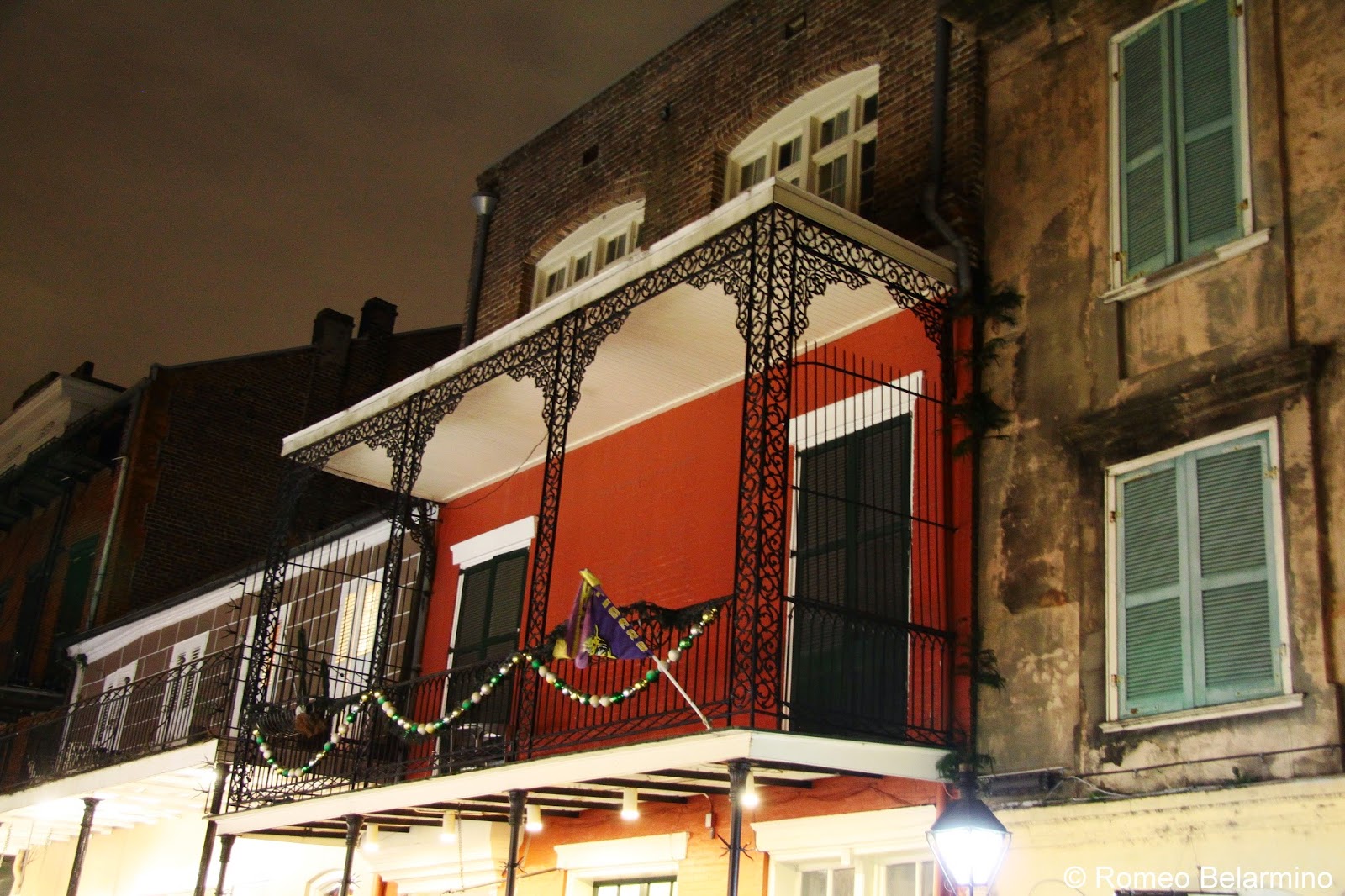
Great New Orleans Fire – Much of the French Quarter was consumed by fire in 1788.  856 buildings including the church were destroyed.  The fire occurred on Good Friday so the church bells could not be rung to sound the alarm.  Many of the buildings were made with cypress wood façades and the buildings were demolished within hours.  The Spanish replaced them with brick structures with inner courtyards, and these are the buildings that define French Quarter architecture.  In case you were wondering, all those balconies are called galleries if they are held up by posts that reach the ground.  Balconies are supported by brackets.

Garden District Walking Tour


Short Favrot House Garden District Walking Tour New Orleans
Short-Favrot House with a cast-iron cornstalk fence.
A Garden District Walking Tour explores the Lafayette Cemetery #1 and the architecture of the Garden District homes along with a little peek into the lives of the rich and famous residents.

Lafayette Cemetery No. 1 Garden District Walking Tour New Orleans
Lafayette Cemetery No. 1.
Lafayette Cemetery No. 1 – The Lafayette Cemetery, opened in 1833, is one of New Orleans’ many above-ground cemeteries.  New Orleans’ cemeteries are above-ground because the underground water is so close to the surface.  Because the people of New Orleans were Catholic, they couldn’t cremate their deceased, so family tombs were used.  One of the Lafayette Cemetery tombs has been used by a family since 1858.  More people are born, live, and die in New Orleans than other places, so many generations of a family use the same tomb.

Shotgun Houses – Shotgun houses are narrow rectangular houses.  They are so named because you can shoot a gun through the front door and the bullet will pass through all the rooms and exit the back door without hitting a wall.  They didn’t provide much privacy, but rather were built for airflow.  Double shotgun houses are duplexes, usually occupied by the same family.

Benjamin Button House Garden District Walking Tour New Orleans
Filming location for The Curious Case of Benjamin Button.
Benjamin Button House – The Curious Case of Benjamin Button was filmed at 2707 Coliseum Street.  The house is an example of Greek revival architecture from the late 1840s.  Greek revival architecture buildings are symmetrical with columns and galleries and are painted white with black shudders and trim.  In front of the home is a large cement block used for getting into carriages.

Sandra Bullock House – Sandra Bullock’s house is nearby at 2627 Coliseum Street.  Her home is dark green with cast iron and large hedges blocking the view.

John Goodman House – John Goodman’s house is found at 2425 Coliseum Street.  It was previously owned by Trent Reznor of the Nine Inch Nails.  The underside of the gallery is painted New Orleans Blue, which is said to keep out ghosts and wasps.

Musson-Bell House Garden District Walking Tour New Orleans
The home of Edgar Degas' uncle Michael Musson.
Musson-Bell House – This large pink house at 1331 3rd Street was built by Michael Musson, a cotton merchant who may be better known as the uncle of artist Edgar Degas.  Musson’s blind daughter, Estelle, married her first cousin and Edgar Degas’ brother, René de Gas.  Estelle’s friend and neighbor came to read to her frequently.  René de Gas eventually ran off with Estelle’s friend.  Musson adopted Estelle and René’s surviving children and changed their last names.

Anne Rice House – Anne Rice, the author of The Vampire Chronicles, used to live at 1239 First Street.  The residence is transitional in style, which means it is a mix of styles, in this case Italianate and Greek revival. The house features a Greek keyhole doorway and cast iron that upon close inspection looks like either Carmen Miranda or a skull.

Archie Manning House – While I’m not much of a football fan, I am a Peyton Manning fan, so I was very excited that our Garden District walking tour included a pass by the Peyton family home at 1420 First Street.  Residents remember the Manning boys playing in the streets as children.

Cemetery Voodoo Walking Tour


St. Louis Cemetery No. 1 Walking Tour New Orleans
St. Louis Cemetery No. 1.
The cemetery voodoo walking tour visits another above-ground cemetery in New Orleans, St. Louis Cemetery No. 1.  This cemetery opened in 1789 and has some famous residents including Marie Laveau, Madame LaLaurie, and eventually Nicolas Cage.

Our Lady of Guadalupe Chapel – Our Lady of Guadalupe Chapel was first built in 1826 as a mortuary chapel.  To the left of the altar is the St. Jude Shrine, which contains a relic of St. Jude.  Don’t be surprised to find homeless people sleeping on the pews.

Marie Laveau – Marie Laveau was a yellow fever nurse, a free woman of color, and a Catholic.  She is known as the Voodoo Queen of New Orleans because she used roots and herbs for homeopathic cures.  In New Orleans voodoo was holistic and positive.  She married Jacques Paris, a free man from Haiti.  When he died she began calling herself Widow Paris.  She later began a relationship with Louis Christophe Dominick Duminy de Glapion, a white man, with whom she had seven children, two of which survived.  When she died some called her a saint while others called her a witch.  She is buried in her family's tomb.

Madame LaLaurie – Marie Delphine Lalaurie was a Louisiana-born socialite.  It is known that she badly mistreated her slaves.  It is believed she tortured and murdered slaves.  She self-exiled to France and died in Paris, but she is buried in St. Louis Cemetery #1.

Nicolas Cage Pyramid Tomb Cemetery Walking Tour New Orleans
Why Nicolas Cage, why?
Nicolas Cage – For some reason Nicolas Cage has a love affair with New Orleans.  He has owned multiple homes in the city, though those were lost in foreclosure.  He now rents a place in the French Quarter.  However, he does still own a small piece of New Orleans land in the form of a tomb in St. Louis Cemetery #1.  I’ve always been a fan of Nicolas Cage (I know, feel free to mock me), but seeing his Masonic style nine-foot deep pyramid tomb in the middle of the St. Louis Cemetery made me very sad.  It is said no respect was given during the building of his tomb to his cemetery neighbors.  Other tombs were injured during the process and the pyramid is completely out of place in this historic cemetery.

New Orleans Italian Mutual Benevolent Society Easy Ride Tomb Cemetery Walking Tour New Orleans
Easy Rider tomb.
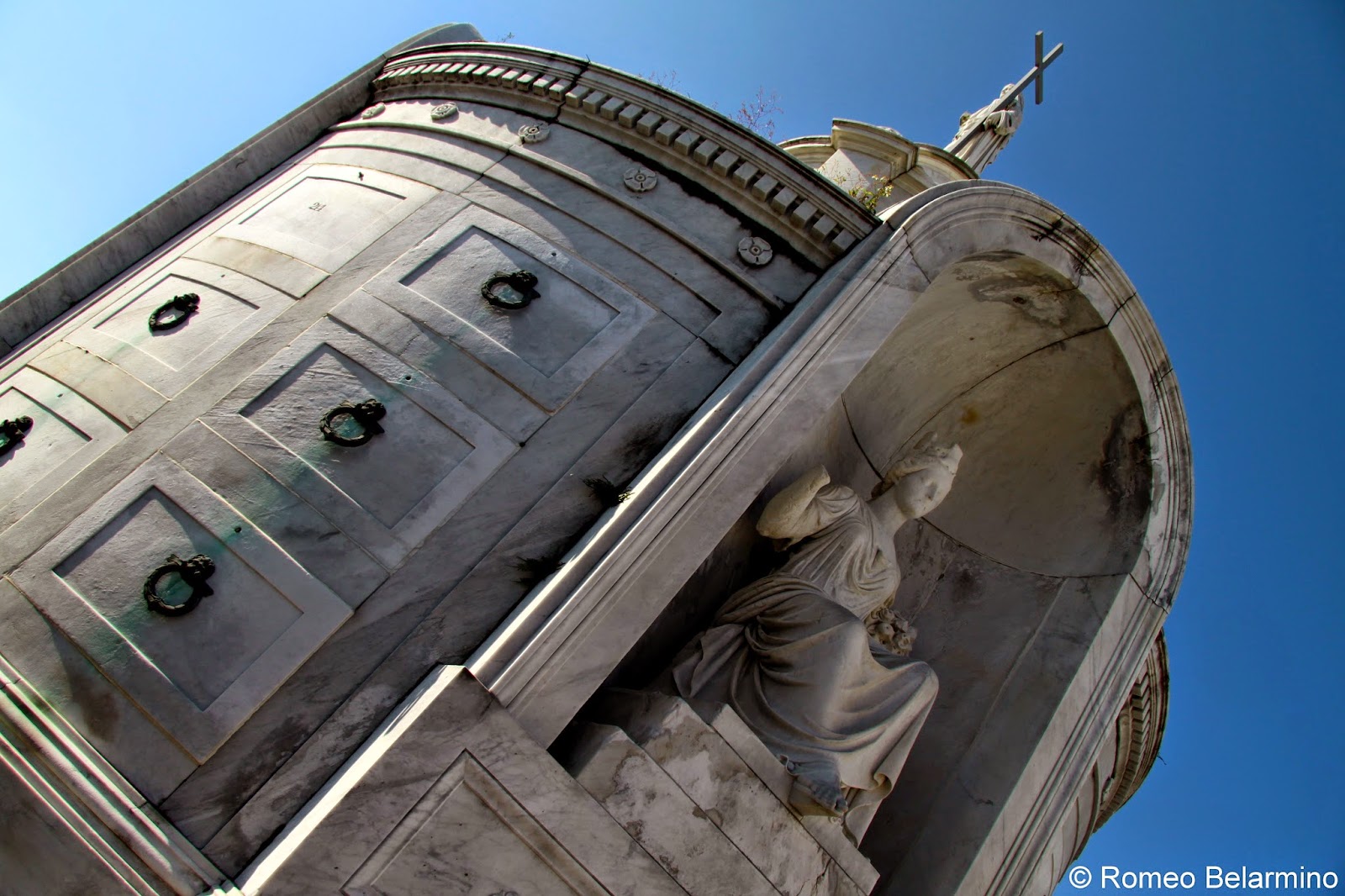
Easy Rider Tomb – The New Orleans Italian Mutual Benevolent Society tomb was designed in 1857 by architect Pietro Gualdi.  What most people recognize it from is the movie Easy Rider, when Peter Fonda sat on the statue of Italia.  The group tomb has 24 separate openings.

Homer Plessy – Another resident of the St. Louis Cemetery is Homer Plessy.  Homer Plessy was a free man of color born during the Civil War.  He was seven-eighths of European descent and one-eighth of African descent, but was still classified as black.  He was arrested for sitting in a “white only” train car.  He took his case all the way to the Supreme Court.  Unfortunately the Plessy v. Ferguson decision in 1896 resulted in the separate-but-equal doctrine, allowing segregation to be the law.  This doctrine remained until 1954, when it was overturned by Brown v. Board of Education.

New Orleans’ Original Cocktail Walking Tour


Broussard's Hurricane Original New Orleans Cocktail Walking Tour
A Hurricane at Broussard's.
New Orleans is famous for its cocktails.  A New Orleans cocktail tour will introduce you to the many cocktails of New Orleans and some of the best places to find them.  We joined the original cocktail tour of New Orleans with Gray Line, where everyone starts with a welcome drink in a go-cup and then visits bars around the city with the opportunity to purchase additional cocktails.

The Court of Two Sisters – The Court of Two Sisters is a restaurant which used to be a notions shop owned by two sisters who died within two months of each other in 1944.  Outdoor diners are shaded by a 100-year-old Wisteria tree in a courtyard that may be the largest in New Orleans.  The cocktail featured at The Court of Two Sisters was the Bayou Bash, a Southern Comfort, juice, and wine drink poured in layers and which tastes like sangria.

Broussard’s – Broussard’s is one of New Orleans’ famous old-line creole restaurants.  This restaurant has the oldest living Wisteria in the French Quarter.  Paul Gustings, a 35-year bartender, poured two classic New Orleans cocktails, the Pisco Punch and the Hurricane.  The bar also offers Absinthe service.

Arnaud's Richelieu Bar Original New Orleans Cocktail Walking Tour
Richelieu Bar at Arnaud's.
Arnaud’s– Arnaud’s, another old-line creole restaurant, has two bars, French 75 and the Richelieu Bar.  While French 75 is the more popular bar, the Richelieu Bar is actually the original bar of Arnaud’s.  The drinks offered here were two more classics, the French 75 and the Sazerac, the official cocktail of New Orleans.

We took our French Quarter, Garden District, and Cemetery Voodoo walking tours with Historic New Orleans Tours, Inc.  Tours are small and cost $20 per person.  Reservations are not required.  Guests can just show up at the pre-determined meeting place.  If a lot of people show up, the tour guide will call in for another so groups can be split and kept small.  Historic New Orleans Tours, Inc. also offers a cocktail tour and a haunted tour.  We took the Gray Line New Orleans’ Original Cocktail Walking Tour as it is the original cocktail tour of New Orleans.  Guided walking tours of the French Quarter and Garden District are also included with the City Sightseeing New OrleansUnlimited Hop-On Hop-Off bus ticket.

Thank you to the New Orleans Convention and Visitors Bureau and the New Orleans Hotel Collection for hosting our trip to New Orleans and making this post possible.  As always, all opinions are my own.  For updates on what is going on in New Orleans, follow the New Orleans CVB on Facebook, Twitter, and Instagram.

Travel the World: Taking a New Orleans walking tour will acquaint travelers with the past and present of New Orleans.